Systaems

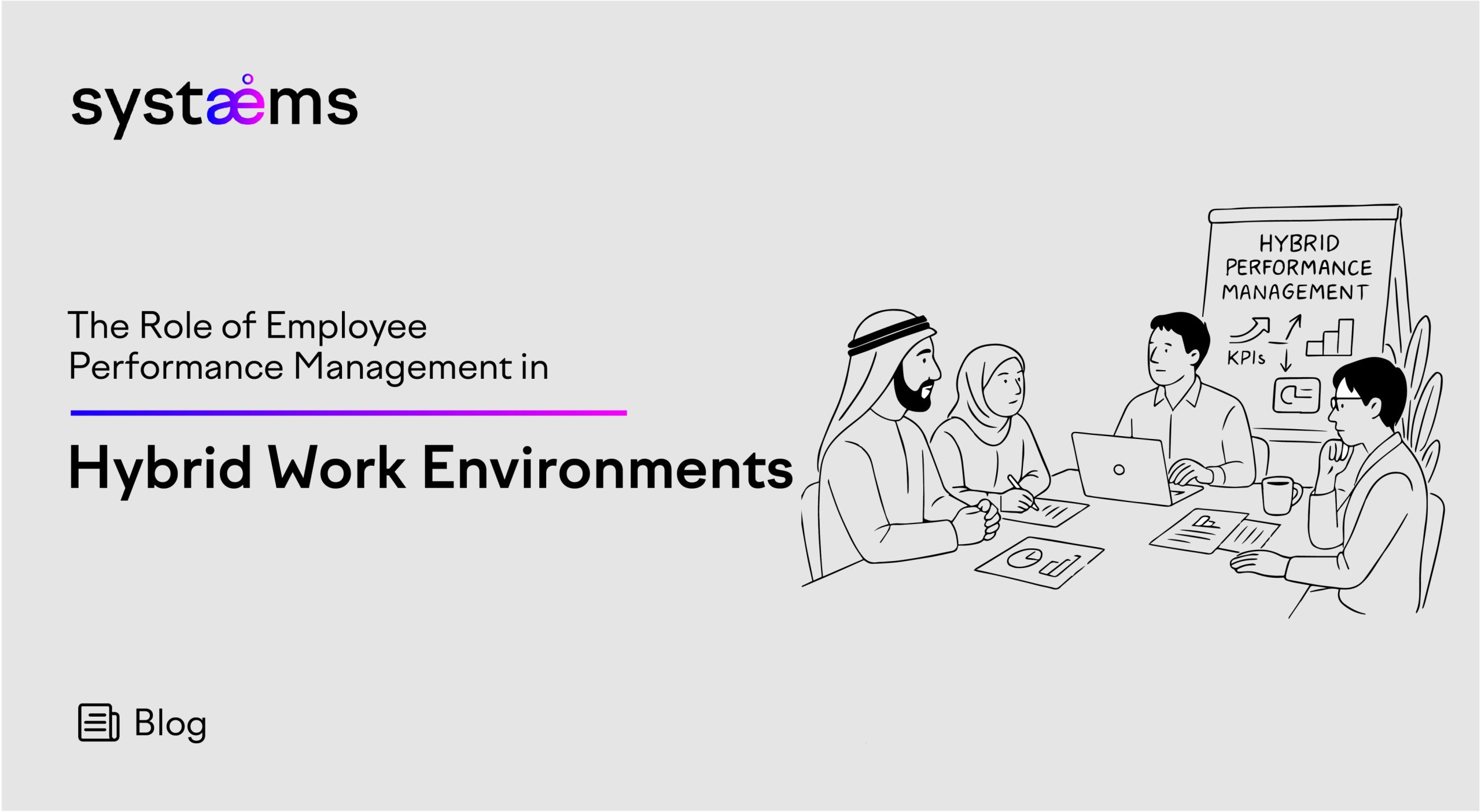
The Role of Employee Performance Management in Hybrid Work Environments

Validated by: Raluca Vintila
Written by: Kavya RS
Published on: 22 April, 2026

On this page

    Optimizing Employee Performance Management for Hybrid Work Success

    The rise of hybrid work models has transformed how organizations measure, monitor, and improve employee performance. Remote and in-office employees require flexible performance management systems that maintain accountability while fostering engagement, collaboration, and productivity.

    Effective employee performance management in hybrid environments ensures that strategic objectives are met without compromising employee experience. This article explores best practices, implementation strategies, and the benefits of adapting performance management to hybrid work models.

    Summary

    • Hybrid Work Challenges: Dispersed teams, flexible schedules, communication gaps, and engagement risks require updated performance management approaches.
    • Outcome-Focused KPIs: Shift from input-based metrics (hours/tasks) to measurable results tied to organizational goals.
    • Continuous Feedback: Real-time check-ins, actionable guidance, and recognition replace infrequent annual reviews.
    • Data-Driven Insights: AI and analytics help monitor trends, forecast risks, and inform resource allocation.
    • Adaptive Frameworks: Use Balanced Scorecards, OKRs, or KPI cascades to accommodate diverse work styles and remote accountability.
    • Employee Engagement & Well-Being: Track motivation, workload, and participation in wellness/professional development to prevent burnout.

    Why Hybrid Work Demands a New Approach

    Hybrid work introduces unique challenges to traditional performance management frameworks:

    • Dispersed Teams: Managers may struggle to observe employee contributions and provide timely feedback.
    • Variable Work Schedules: Flexible hours require outcome-focused KPIs rather than input-focused metrics.
    • Communication Gaps: Remote work can lead to misalignment on goals and expectations.
    • Employee Engagement: Maintaining motivation and accountability requires consistent, transparent performance monitoring.

    Organizations that fail to adapt risk reduced productivity, decreased engagement, and misaligned performance outcomes.

    Adopting hybrid-friendly performance management systems can turn these challenges into opportunities for innovation and improved organizational resilience.

    Key Components of Effective Hybrid Performance Management

    1. Outcome-Focused KPIs

    Traditional metrics such as hours worked or tasks completed are less relevant in hybrid environments. Instead, KPIs should focus on measurable outcomes aligned with organizational objectives.

    • Example: A sales team can be evaluated based on deals closed, customer satisfaction, or revenue generated rather than call volume.
    • Implementation Tip: Use Systaems’ Performance Measurement Services to design KPIs that are outcome-oriented, transparent, and adaptable.

    2. Continuous Feedback and Communication

    Regular check-ins and real-time feedback replace annual or semi-annual reviews. Managers can leverage technology to provide guidance, recognize achievements, and address performance gaps.

    • Tools such as digital dashboards, collaboration platforms, and project-tracking software enhance transparency and accountability.
    • Feedback should be structured, actionable, and aligned with organizational goals.

    3. Data-Driven Insights

    Hybrid work generates vast amounts of data from employee activities, collaboration tools, and project outcomes. Leveraging AI and analytics enables managers to identify trends, assess engagement, and forecast performance risks.

    • Data Services Integration: Systaems’ Data Services help consolidate, clean, and analyze employee performance data for informed decision-making.
    • Insights can inform resource allocation, training needs, and strategy adjustments.

    4. Adaptive Performance Management Frameworks

    Hybrid teams require flexible systems that accommodate diverse work styles, time zones, and responsibilities.

    • Implement frameworks such as the Balanced Scorecard or Objectives and Key Results (OKRs) that allow remote employees to track progress independently.
    • Update KPIs regularly to reflect changing priorities or market conditions.
    • Promote a culture of ownership and accountability while avoiding micromanagement.

    5. Employee Engagement and Well-Being

    A holistic approach considers both productivity and employee experience. Engagement surveys, wellness initiatives, and professional development programs ensure that remote and in-office employees remain motivated and committed.

    • Encourage collaboration through virtual team activities, mentoring, and recognition programs.
    • Monitor workload to prevent burnout, which can negatively affect performance outcomes.

    Implementation Roadmap for Hybrid Performance Management

    1. Assess Current Systems
      Evaluate existing performance management frameworks to identify gaps in hybrid adaptability.
    2. Define Outcome-Based KPIs
      Align KPIs with organizational strategy while focusing on measurable results rather than time spent.
    3. Invest in Digital Tools
      Use performance dashboards, collaboration platforms, and real-time analytics to track and report.
    4. Train Managers and Employees
      Equip teams with skills to interpret data, provide feedback, and adapt to hybrid work expectations.
    5. Embed Continuous Feedback Loops
      Implement regular check-ins, peer reviews, and automated reporting systems to ensure transparency.

      6. Monitor, Refine, and ScaleContinuously evaluate the effectiveness of hybrid performance frameworks and adjust KPIs, tools, and processes as needed.

    Benefits of Effective Hybrid Performance Management

    • Enhanced Accountability: Employees understand expectations and how their work contributes to organizational goals.
    • Increased Engagement: Continuous feedback and recognition improve motivation and retention.
    • Data-Driven Decisions: Real-time insights inform leadership decisions and resource allocation.
    • Agility and Adaptability: Organizations can respond to changing business conditions without disrupting operations.
    • Better Alignment with Strategy: Performance management ensures employees’ efforts support long-term objectives.

    Real-World Example

    Leading companies demonstrate the effectiveness of hybrid performance management. Google, for instance, implemented outcome-focused KPIs and continuous feedback across its hybrid workforce. Using real-time dashboards and AI-assisted analytics, the company enhanced productivity, engagement, and alignment with corporate goals (source, source).

    Similarly, professional services firms have adopted AI-enabled dashboards to track remote employee contributions and project milestones, aligning hybrid work performance with strategic goals.

    Challenges and Best Practices

    • Maintaining Visibility: Regular updates and dashboards help managers monitor remote work effectively.
    • Balancing Autonomy with Accountability: Employees need flexibility, but also clarity on expectations.
    • Ensuring Data Accuracy: Clean, reliable data is essential for AI-driven insights.
    • Continuous Learning: Encourage professional development and skill enhancement for hybrid teams.

    Organizations that implement these best practices can achieve a high-performing hybrid workforce while maintaining employee satisfaction and alignment with corporate strategy.

    Final thoughts

    The hybrid work model requires organizations to rethink employee performance management. By adopting outcome-focused KPIs, leveraging data-driven insights, implementing flexible frameworks, and fostering engagement, companies can maintain productivity, accountability, and strategic alignment in dispersed teams.

    Organizations ready to enhance hybrid performance management can combine structured KPIs, advanced analytics, and continuous feedback mechanisms to ensure success.

    👉 Explore how your organization can build a performance-driven hybrid workforce by contacting Systaems today.

    References

    1. Harvard Business Review – How to Manage Hybrid Teams for Productivity and Engagement
      https://hbr.org/2022/07/how-to-manage-hybrid-teams

    2. McKinsey & Company – The Future of Work After COVID-19
      https://www.mckinsey.com/featured-insights/future-of-work/the-future-of-work-after-covid-19

    3. Deloitte Insights – Reimagining Performance Management for Hybrid Work
    https://www2.deloitte.com/us/en/insights/focus/human-capital-trends/2021/hybrid-work-performance-management.html

    Discover Our Insights

    Top

    Subscribe