
Systaems

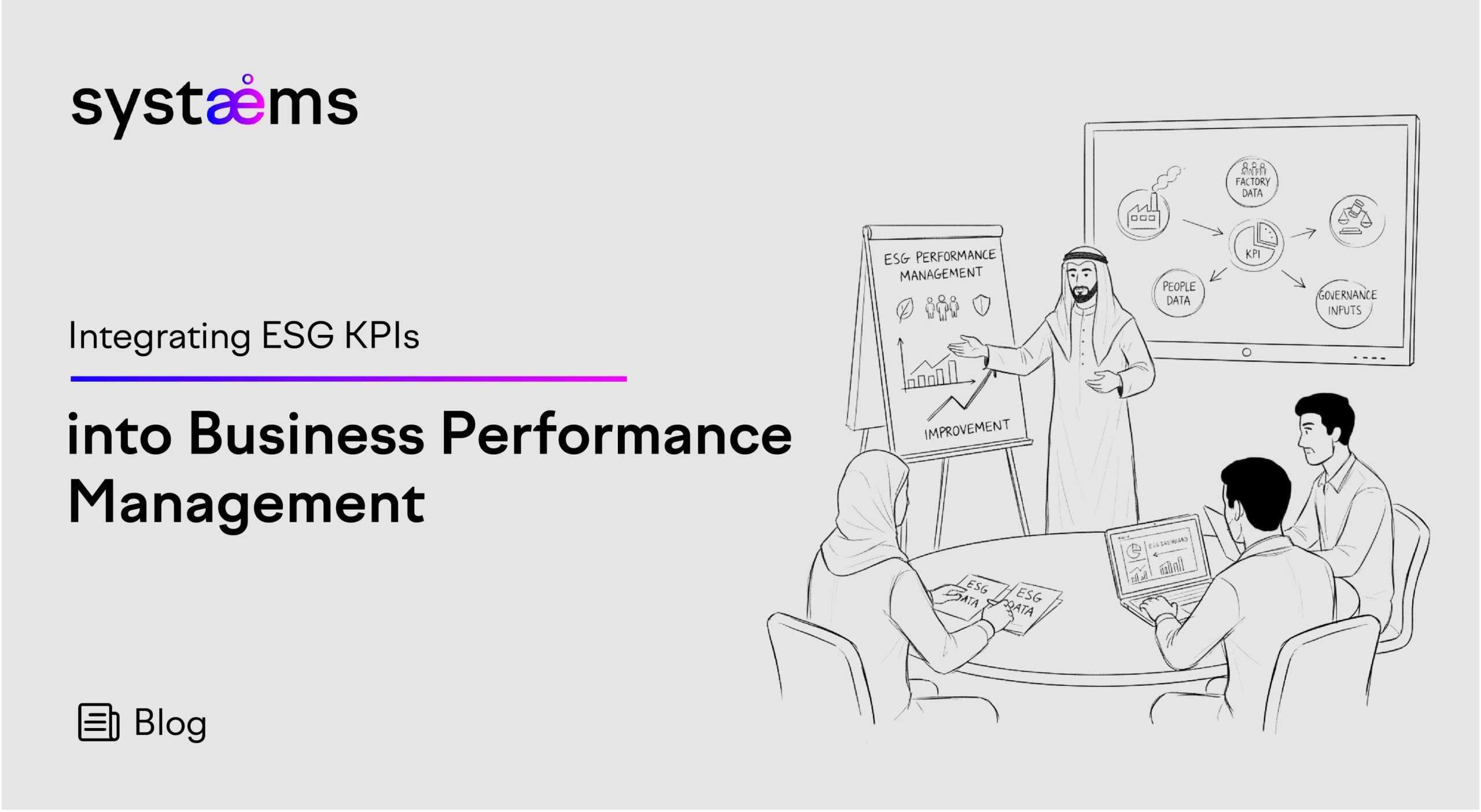
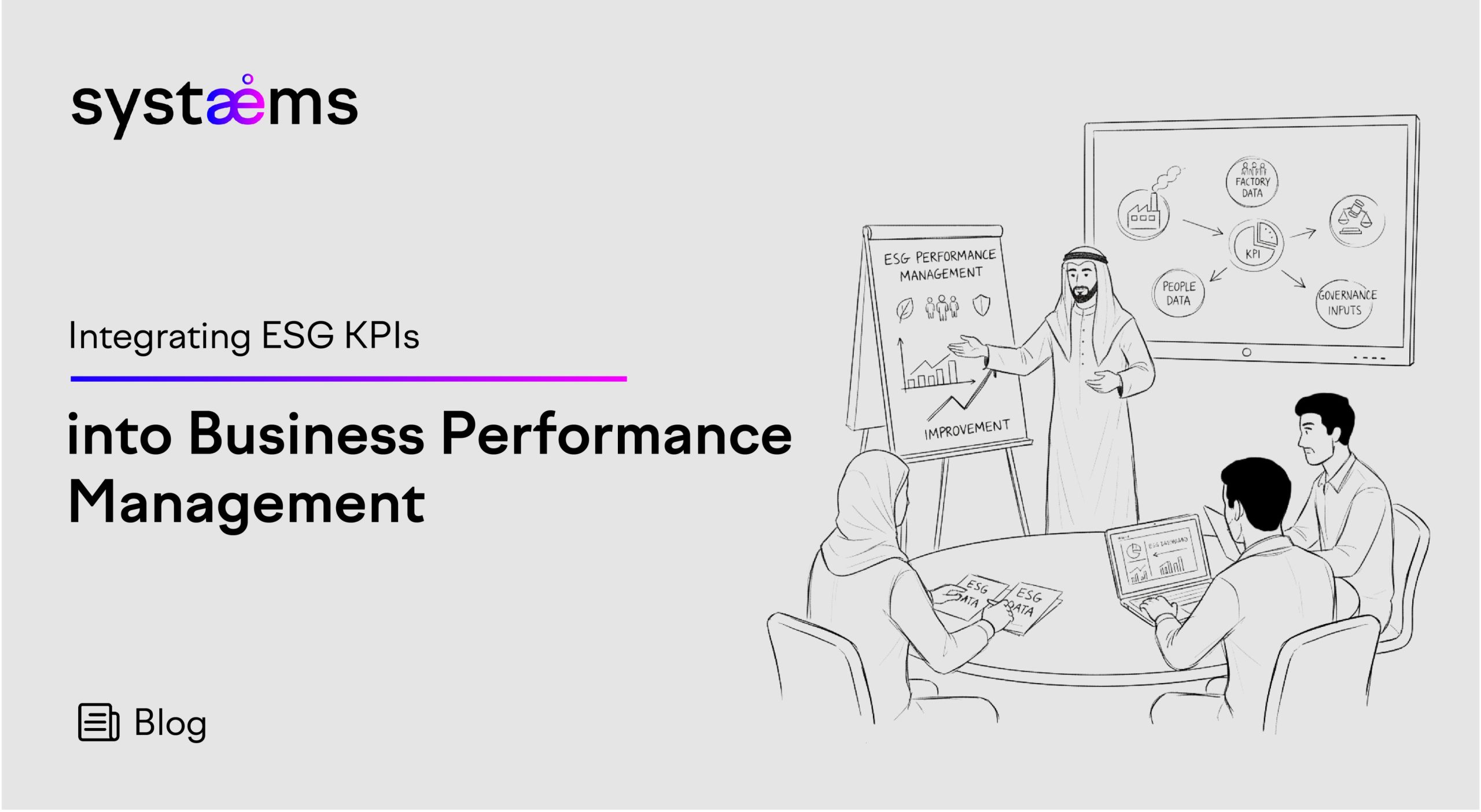
Integrating ESG KPIs into Business Performance Management

Validated by: Raluca Vintila
Written by: Kavya RS
Published on: 22 April, 2026

On this page

    Embedding ESG KPIs into Business Performance: Turning Sustainability into Strategic Value

    Environmental, Social, and Governance (ESG) considerations have evolved from optional reporting items to strategic imperatives. Investors, regulators, customers, and employees now expect organizations to demonstrate measurable ESG outcomes that are aligned with corporate strategy. 

    Incorporating ESG metrics into performance management ensures that sustainability initiatives are not only compliant but also strategically advantageous, enhancing long-term value, operational efficiency, and stakeholder trust.

    Organizations that embed ESG in performance management can anticipate risks, uncover opportunities, and reinforce a culture of accountability. By connecting sustainability objectives to operational KPIs, firms can transform ESG from a regulatory requirement into a lever for competitive advantage.

    Summary

    • Strategic ESG Integration: Align ESG KPIs with corporate strategy for investor confidence, compliance, and competitive advantage.
    • Measurable ESG KPIs: Track outcomes like carbon intensity, diversity ratios, and ethical sourcing.
    • Data-Driven Monitoring: Use dashboards and analytics to enable transparency and informed decision-making.
    • Technology as an Enabler: Predictive modeling and automated reporting turn ESG into operational value.
    • Real-World Example – Unilever: Embedding ESG in operational KPIs delivered tangible environmental, social, and financial results.

    Why ESG Integration Matters

    Integrating ESG measurements into performance management addresses multiple organizational imperatives:

    • Investor and Stakeholder Expectations: Global investors increasingly evaluate ESG performance when allocating capital. ESG-aligned organizations attract long-term investment and enhance credibility.
    • Regulatory Compliance: Regulatory bodies are implementing stricter ESG reporting standards globally. Integrating ESG into operational performance ensures compliance, reduces legal and reputational risk, and strengthens governance practices.
    • Strategic Differentiation: Organizations with integrated ESG metrics distinguish themselves in competitive markets. Strong ESG performance enhances brand reputation, drives customer loyalty, and attracts and retains top talent.

    In an era where sustainability and business performance are interlinked, organizations that fail to integrate ESG risk not only face regulatory scrutiny but also erode market confidence.

    Linking ESG to Performance Management

    Traditional ESG reporting often emphasizes disclosure over measurable impact. Modern performance-driven organizations embed ESG KPIs into corporate strategy and operational decision-making through:

    1. Defining Clear ESG KPIs
      Measurable indicators are essential. Examples include carbon intensity reduction, energy efficiency improvements, gender diversity ratios, ethical sourcing compliance, and board governance effectiveness. KPIs provide transparency on progress and enable operational teams to translate ESG initiatives into measurable outcomes.

    2. Embedding ESG in Strategy Execution
      Sustainability goals must be integrated into broader corporate objectives to ensure they influence decisions, resource allocation, and operational priorities. Organizations can use structured frameworks such as Balanced Scorecards or OKRs to link ESG initiatives to strategic objectives. For guidance on linking operational KPIs to corporate strategy, refer to our blog, “Integrating Strategy and Performance Management for Sustainable Growth.”

    3. Leveraging Data Services for ESG Monitoring
      Accurate ESG measurement depends on high-quality data collection, validation, and visualization. Systaems Data Services enable organizations to track ESG KPIs, create real-time dashboards, and generate actionable insights. This ensures that reliable evidence rather than assumptions informs ESG decisions.

    4. Continuous Review and Improvement
      ESG is a dynamic discipline. Performance frameworks should enable continuous monitoring, periodic review, and adaptation of KPIs in response to emerging trends, stakeholder expectations, and regulatory changes. This constant feedback loop ensures sustained improvement and alignment with business strategy.

    The Role of Technology in ESG Performance Management

    Digital transformation amplifies ESG integration through advanced analytics and real-time monitoring. Technology enables organizations to:

    • Analyze Data Trends: Identify emerging risks and opportunities across ESG dimensions – benchmark performance against peers and global standards.
    • Visualize Performance: Dashboards provide transparency and help communicate progress to stakeholders, including boards, investors, and employees.
    • Predict Outcomes: Predictive modeling allows organizations to forecast ESG impacts of decisions before they are executed.
    • Automate Reporting: Streamlines ESG reporting, ensuring timeliness, accuracy, and compliance with regulatory standards.

    Companies leveraging technology effectively transform ESG from a compliance activity into a strategic driver of operational excellence, improved efficiency, and reputational value.

    Real-World Example: Unilever

    Unilever exemplifies the integration of ESG KPIs into business performance management. The company embedded sustainability targets directly into its operational KPIs across its global supply chain, product portfolio, and governance processes. This integration produced tangible results:

    • Environmental Impact: Unilever reduced CO2 emissions from energy per ton of production by 52% between 2008 and 2020.
    • Social Initiatives: Achieved significant improvements in workforce diversity, pay equity, and community engagement programs.
    • Financial Outcomes: The integration of ESG into operational performance correlated with improved long-term shareholder value, resilience during market fluctuations, and enhanced brand reputation.

    Unilever’s approach illustrates that ESG integration is not an isolated initiative but a core strategic practice, where sustainability directly influences operational decision-making and business outcomes.

    Practical Steps for ESG Integration

    1. Identify Material ESG Issues: Determine the environmental, social, and governance factors that most significantly impact the organization and stakeholders.

    2. Define Measurable KPIs: Develop quantifiable measurements to align ESG objectives with operational performance and corporate strategy.

    3. Implement Data Services: Utilize dashboards, analytics, and reporting platforms to capture, monitor, and analyze ESG outcomes.

    4. Embed ESG into Governance Structures: Ensure ESG considerations are embedded in decision-making, accountability frameworks, and executive review processes.

    5. Review and Adapt Continuously: Regularly evaluate ESG performance, adjust KPIs, and communicate outcomes to stakeholders to maintain transparency and drive improvement.

    For further insights on embedding ESG within performance frameworks, explore Building a Performance-Driven Culture with KPIs and Data Insights.

    Final thoughts

    Integrating ESG measurements into performance management is vital for sustainable growth, regulatory compliance, and competitive differentiation. Organizations that align ESG objectives with operational KPIs gain transparency, improve stakeholder trust, and generate tangible business outcomes. 

    Companies like Unilever demonstrate that ESG-focused performance management not only meets compliance requirements but also drives long-term financial and societal benefits.

    By leveraging structured performance frameworks and advanced data services, organizations can ensure ESG initiatives are strategic enablers rather than isolated compliance exercises. Integrating ESG measurements enhances operational resilience, supports informed decision-making, and positions companies to thrive in an increasingly responsible business environment.

    👉 Explore how your organization can embed ESG into performance management with Systaems Data Services and Performance Measurement Services.

    References

    1. Unilever. Sustainable Living Plan. Link
    2. Harvard Business Review. New Paradigms for a Sustainable Economy.  Link
    3. PwC. ESG Reporting and Performance Management. Link 

    Discover Our Insights

    Top

    Subscribe