
Systaems


On this page
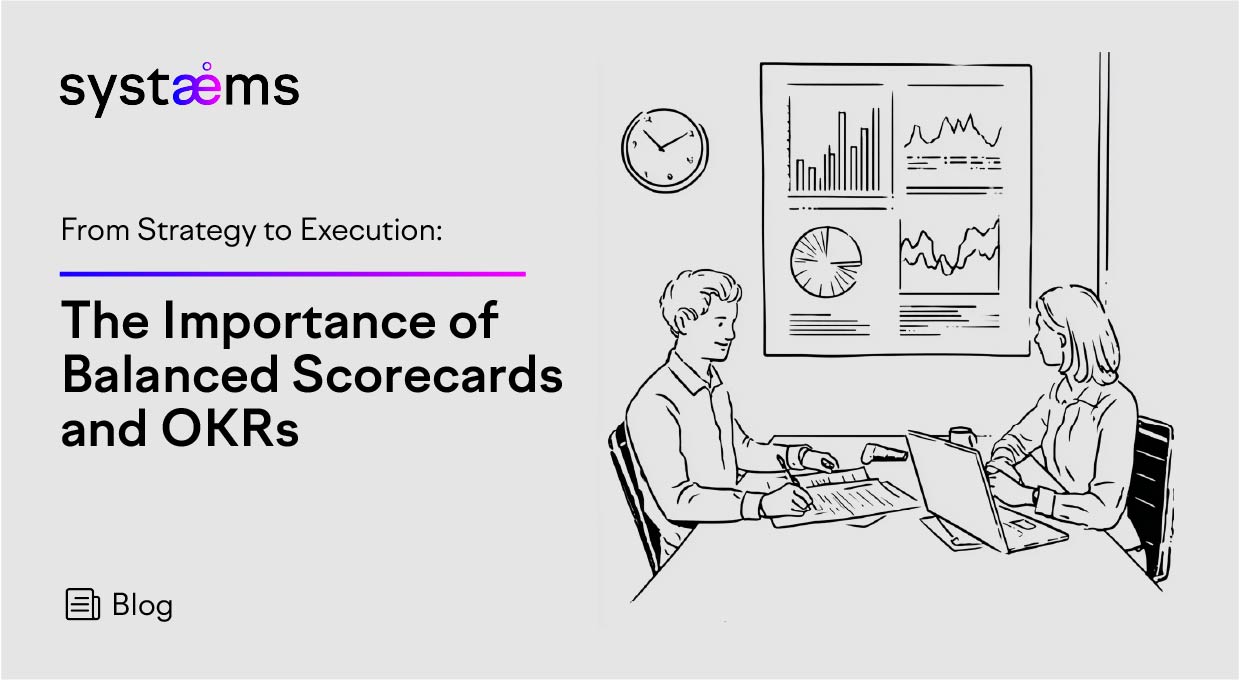
Bridging Strategy and Action: Harnessing Balanced Scorecards and OKRs
Strategy without execution is merely a plan on paper. Organizations often invest significant resources in defining vision, mission, and strategic objectives but struggle to translate these into measurable outcomes. Balanced Scorecards (BSC) and Objectives and Key Results (OKRs) are structured frameworks that bridge this gap, aligning corporate strategy with operational performance and fostering a culture of accountability and results-driven decision-making.
By adopting these frameworks, organizations can track progress in real time, adjust priorities dynamically, and ensure that strategy is not an abstract concept but a set of actionable, measurable initiatives that drive tangible results.
Summary
- Strategy Execution Gap: Many strategies fail due to misalignment, weak KPIs, lack of accountability, and limited visibility.
- Balanced Scorecards (BSCs): Provide a holistic view across financial, customer, internal process, and learning/growth perspectives for long-term strategic alignment.
- Objectives and Key Results (OKRs): Agile, outcome-focused framework with short-term, measurable goals that promote transparency, accountability, and rapid adaptation.
- Integration of BSC and OKRs: Combines strategic alignment with operational agility, enabling real-time tracking, continuous improvement, and clarity of ownership.
- Digital Tools Enablement: Real-time dashboards and analytics support performance visibility, resource allocation, and adaptive strategy execution.
- Real-World Examples: Google and Intel demonstrate successful integration of BSC and OKRs to drive measurable outcomes, innovation, and sustained strategic focus.
- Key Benefits: Enhanced strategic clarity, operational excellence, stronger accountability, improved agility, and sustainable growth.
Why Strategy Execution Often Fails
Despite well-crafted strategies, execution failures remain common due to several factors:
- Lack of Alignment: Teams may work in silos, with objectives that do not directly contribute to strategic goals.
- Ineffective KPIs: Organizations track activities rather than meaningful outcomes.
- Insufficient Accountability: Without clear ownership, initiatives lose focus and momentum.
- Limited Visibility: Leadership often lacks real-time performance insights, hindering timely course corrections.
Research shows that up to 67% of well-formulated strategies fail due to poor execution. These challenges highlight the need for structured frameworks such as Balanced Scorecards and OKRs that connect strategy to execution and provide measurable, actionable metrics.
The Evolution of Performance Management Frameworks
The demand for more agile and effective performance management tools came as the pace of global business accelerated and organizations recognized the inadequacy of exclusively financial or annual planning methods. The Balanced Scorecard was introduced by Kaplan and Norton in the 1990s to address these gaps, providing a holistic approach to measuring organizational performance.
In parallel, the OKR framework emerged in tech-driven cultures like Intel and later Google, emphasizing ambitious goal-setting with frequent reviews to help organizations adapt rapidly in fast-changing environments.
Balanced Scorecards: Translating Strategy into Measurable Outcomes
Developed by Kaplan and Norton, the Balanced Scorecard is a comprehensive framework that aligns business activities with strategy and measures performance across four perspectives:
- Financial Perspective: Tracks revenue growth, cost reduction, profitability, and return on investment.
- Customer Perspective: Monitors customer satisfaction, retention, and market share.
- Internal Process Perspective: Assesses operational efficiency, quality, and innovation.
- Learning and Growth Perspective: Measures employee engagement, skills development, and organizational capacity.
By using a Balanced Scorecard, organizations can ensure that all aspects of strategy are monitored systematically, providing a holistic view of performance. For organizations seeking to implement this framework, Systaems Strategy & Business Planning services provide end-to-end support, from defining objectives to developing performance dashboards.
Strengths and Limitations of BSC
Balanced Scorecard’s fundamental value lies in its comprehensive scope. It incorporates both leading and lagging indicators, balancing quantitative and qualitative measures. However, the framework demands substantial investment in data collection and cross-functional alignment, and it may be complex for smaller organizations to maintain. Overloading with too many metrics can dilute focus.
OKRs: Driving Focus and Agility
Objectives and Key Results (OKRs) complement Balanced Scorecards by offering a flexible, goal-oriented framework that promotes agility.
- Objectives: Qualitative, ambitious goals that define what the organization aims to achieve.
- Key Results: Specific, measurable outcomes that indicate progress toward the objectives.
Unlike BSC, which is reviewed annually or semi-annually, OKRs are typically set and evaluated quarterly, fostering rapid learning and adaptation. The collaborative nature of OKRs encourages active participation across all levels, fueling innovation and stretching what teams believe is possible.
OKRs provide clarity and focus, enabling teams to prioritize initiatives and track outcomes regularly. By combining BSC’s strategic alignment with OKRs’ agility, organizations can ensure that both long-term strategy and short-term priorities are executed effectively.
The Unique Benefits of OKRs
OKRs enable real-time transparency and prioritize outcomes over activities. They fit well in organizations that need rapid execution and are navigating volatile markets, driving continuous performance improvements via stretch goals and agile iteration. However, the risk with OKRs is that by focusing only on prioritized goals, organizations may neglect broader strategic vision unless the system is integrated with a tool like the BSC.
Integrating BSC and OKRs for Maximum Impact
When used together, Balanced Scorecards and OKRs create a dynamic performance management ecosystem:
- Strategic Alignment: BSC provides a framework for translating corporate strategy into key performance areas.
- Operational Agility: OKRs enable teams to respond rapidly to changing market conditions while staying aligned with strategic objectives.
- Performance Visibility: Dashboards and data services allow leadership to monitor progress across multiple perspectives in real time.
- Continuous Improvement: Regular review cycles of OKRs and BSC metrics ensure ongoing refinement of strategies and initiatives.
A hybrid model, where Balanced Scorecard defines corporate direction, and OKRs operationalize near-term priorities, delivers both stability and agility. Many industry leaders successfully synchronize short-term OKRs with longer-term BSC objectives, ensuring everyone works toward clearly mapped strategic priorities.
Organizations can further enhance this integration by leveraging Systaems Performance Measurement Services to design KPIs, dashboards, and reporting structures that embed both BSC and OKRs into daily operations.
BSC vs. OKR: A Comparative Table
Aspect | Balanced Scorecard (BSC) | OKRs |
Focus | Long-term, holistic, strategic performance | Short-term, ambitious goals |
Review Frequency | Annual or semi-annual | Quarterly, often with biweekly check-ins |
Metrics | Leading and lagging indicators across four perspectives | Specific, quantitative outcomes per objective |
Flexibility | Structured, less flexible | Highly flexible, responsive to change |
Organizational Fit | Stable or highly regulated environments | Fast-moving or innovative environments |
Ownership | Shared among teams and leadership | Typically assigned to a specific individual or team per OKR |
Alignment Approach | Top-down cascading objectives and KPIs, with focus on strategic mapping | Rapid, vertical, and horizontal alignment via clear objectives |
Data Requirement | High; requires complex data and resources for implementation | Moderate; focus on the most important results |
Implementation Complexity | Moderate to high | Low to moderate |
Cultural Fit | Structured, accountability-driven cultures | Collaborative, ambitious, and transparent cultures |
Source: quantive, profit, bernardmarr
Real-World Example: Google and Intel
Google and Intel provide compelling examples of how integrating Objectives and Key Results (OKRs) and Balanced Scorecards (BSCs) can revolutionize strategy execution.
Google adopted OKRs early in its growth phase, emphasizing transparent, ambitious goals that promote innovation and accountability at all organizational levels. Each quarter, teams define qualitative objectives along with measurable key results, such as Google Chrome’s launch goal of acquiring 20 million weekly active users.
This approach supports rapid feedback cycles, enabling teams to adjust their efforts dynamically based on real-time results. The company nurtures a culture where even unmet OKRs are opportunities for learning and iteration, reinforcing continuous improvement and strategic alignment.
Intel’s pioneering use of OKRs, developed under Andy Grove’s leadership, combined agile goal-setting with the structured oversight of Balanced Scorecards. This combination allowed Intel to link operational priorities, such as expanding processor market share, directly to strategic KPIs monitored across the enterprise.
By cascading measurable objectives and integrating them within a broader performance framework, Intel sustained competitive advantage and operational focus through rapid technological shifts. Both companies share the hallmark of empowering teams to take clear ownership of results, maintain strategic clarity, and adapt seamlessly to market changes.
Implementing BSC and OKRs: Best Practices
- Define Strategic Objectives Clearly: Begin with corporate vision and mission, ensuring they are actionable and measurable.
- Cascade Objectives and KPIs: Translate high-level objectives into departmental, team, and individual KPIs.
- Establish a Review Cadence: Regularly review progress, ideally quarterly for OKRs and semi-annually for BSC metrics.
- Leverage Technology: Utilize data dashboards to track KPIs, monitor outcomes, and enable real-time decision-making.
- Promote Accountability: Assign ownership of each objective and key result to ensure clear responsibility.
- Foster a Performance Culture: Encourage transparency, learning, and adaptation to maintain alignment and drive results.
For more insights on aligning performance metrics with strategic initiatives, explore our blog From Output to Outcome: How to Move Beyond Vanity Metrics.
Overcoming Implementation Challenges
Successfully embedding frameworks such as OKRs and Balanced Scorecards requires overcoming several common organizational challenges. Leadership commitment is critical; without explicit endorsement and modeling from senior executives, adoption efforts often falter.
Companies also face resistance from employees accustomed to traditional goal-setting methods, which can lead to skepticism about new performance systems. Translating high-level strategy into actionable, departmental, and individual objectives can be difficult, causing misalignment and confusion.
Data infrastructure weaknesses frequently hinder real-time measurement and transparency, while siloed organizational cultures reduce cooperation and shared accountability. For instance, Google overcame these challenges by integrating OKRs at every level of management, reinforcing them consistently during quarterly reviews, and fostering a culture in which risks and missed targets are seen as learning opportunities rather than failures.
Intel tackled data challenges through centralized dashboards that unify Balanced Scorecard and OKR metrics, offering managerial visibility and enabling timely course corrections. The constant feedback loops and iterative adjustments embedded in their approaches have proven essential for sustained adoption and performance improvement.
Digital Transformation and Strategy Execution
Digital transformation has become a crucial enabler for effective strategy execution by providing tools that deliver real-time insights and enhance agility. At Google, sophisticated OKR software platforms provide weekly progress updates, offering transparency and enabling leadership and teams to intervene before deviations become costly.
This shift from quarterly manual reviews to ongoing digital monitoring transforms strategy into a living process, fostering adaptability and alignment.
Intel uses digital scorecards that integrate operational data from global sites, enabling leaders to track production efficiency and innovation metrics in real time.
Such systems facilitate reallocating resources, pivoting strategies in response to market dynamics, and enhancing cross-team collaboration. Digital transformation also promotes transparency, as employees can clearly see their contributions to high-level goals, boosting engagement and accountability.
However, success depends not only on technology but also on investing in employee training to build data literacy. Google’s internal analytics teams support decision-making by helping units identify bottlenecks and optimize workflows.
Companies embracing these technologies can thus drive continuous improvement, maintain competitive advantage, and future-proof their strategy execution capabilities.
The Strategic Benefits
Organizations that implement Balanced Scorecards and OKRs experience measurable benefits:
- Enhanced Strategic Clarity: Teams understand their contribution to overall objectives.
- Improved Agility: OKRs allow rapid adaptation to changing business environments.
- Operational Excellence: BSC ensures a holistic view of performance across financial, customer, process, and growth perspectives.
- Stronger Accountability: Clear ownership drives commitment and results.
- Sustainable Growth: Integration of strategy and execution fosters long-term business resilience and value creation.
Furthermore, these frameworks increase engagement, reduce wasted effort, and support a learning organization that adapts and thrives in a rapidly shifting environment.
Final Thoughts
The gap between strategy formulation and execution is the most common obstacle to organizational success. Balanced Scorecards and OKRs provide complementary frameworks that bridge this gap by aligning corporate strategy with operational performance, enhancing agility, and fostering accountability.
Real-world examples from Google and Intel demonstrate that organizations can achieve measurable performance outcomes, drive innovation, and maintain strategic focus through these frameworks. By embedding these systems into performance management, organizations convert strategy into actionable results, creating a culture of excellence and sustainable growth.
For organizations seeking to implement BSC and OKRs effectively, Systaems Strategy & Business Planning and Performance Measurement Services provide structured support, enabling a seamless translation of strategy into measurable outcomes.
👉 Transform your strategic vision into tangible results by exploring how BSC and OKRs can enhance execution in your organization, reach out to us today.
References
- Kaplan, R., & Norton, D. The Balanced Scorecard: Measures That Drive Performance. Harvard Business Review. Link
- Google. How Google Sets Goals with OKRs. Link
- Doerr, J. (2018). Measure What Matters: OKRs. Link
- Profit.co. Why the Balanced Scorecard is Still Relevant in 2025. Link
- Quantive. OKR Vs. Balanced Scorecard – Differences and Definitions. Link
- What Matters. OKRs and Balanced Scorecard: What’s the Difference? Link
- Weekdone. OKRs vs. Balanced Scorecard – Weekdone. Link
Discover Our Insights
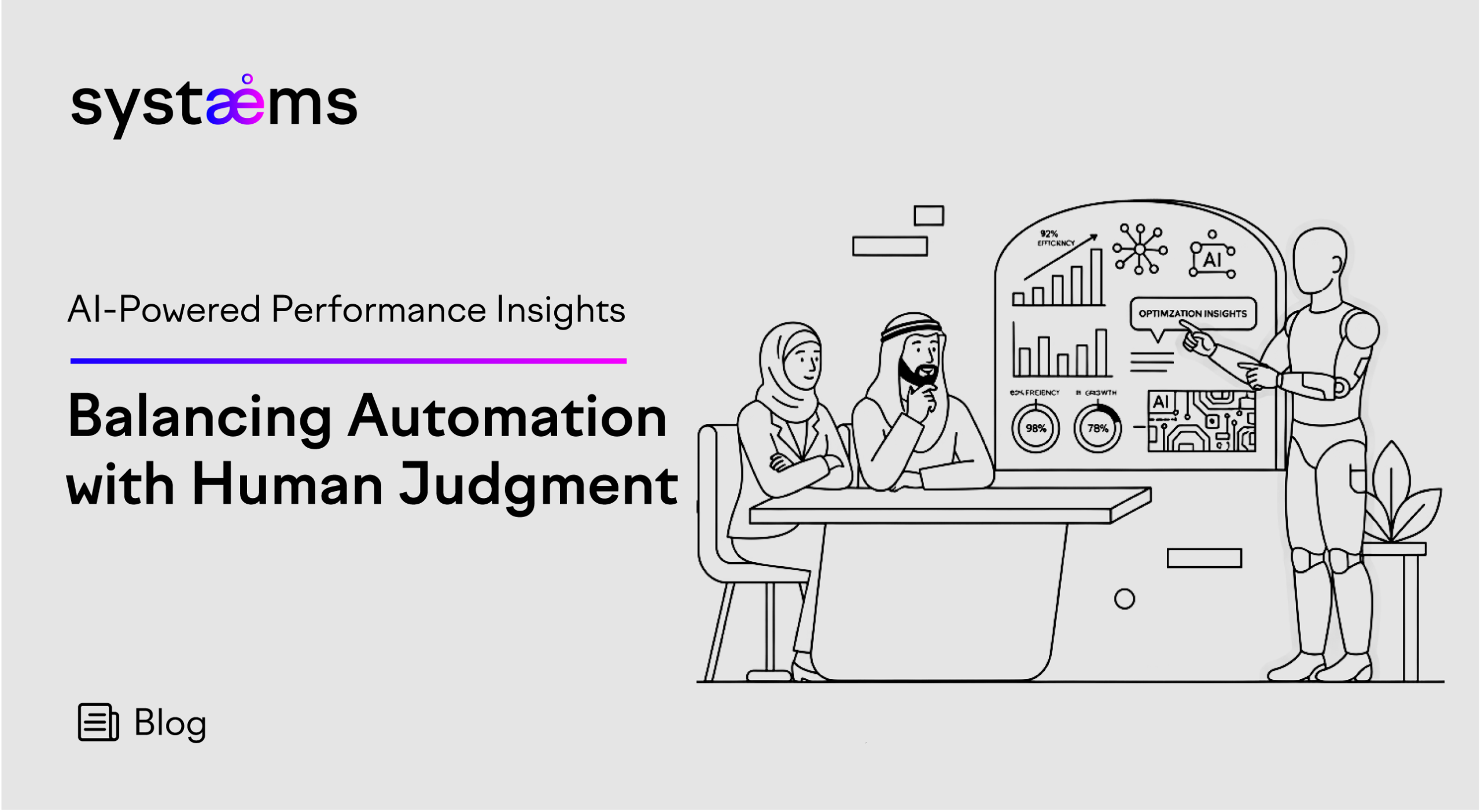
AI-Powered Performance Insights: Balancing Automation with Human Judgment
Harness AI insights while ensuring human judgment maintains accountability, trust, and strategic balance.
Pacing for Performance: Key Considerations for Effective KPI System Implementation
Integrate sustainability, ESG, and responsible AI into risk, compliance, and reputation strategies.

Outcome-Based Pricing & Contract Models in Consulting
Align consulting fees with results using outcome-based pricing to drive value and accountability.