

In today’s turbulent business environment, adaptability has become the defining trait of high-performing organizations. Markets shift rapidly, technologies evolve overnight, and unexpected geopolitical or economic disruptions can threaten even the most established players. In this climate, organizational agility is no longer a competitive advantage; it is a necessity for survival.
But agility is not about speed alone. True agility combines responsiveness with insight. Organizations that react without a clear understanding of the underlying data risk make costly mistakes. The key lies in making informed, data-driven decisions that allow businesses to pivot quickly, without losing strategic direction.
This is where data services and key performance indicators (KPIs) play a transformative role. Together, they provide the clarity, transparency, and alignment needed to adapt effectively. At Systaems, our work across data services and performance measurement consulting has shown how the right frameworks enable leaders to bridge strategy and execution with agility.
Summary
- Organizational agility is essential for thriving in volatile markets.
- Data services provide reliable, actionable information to support informed decision-making.
- KPIs turn data into measurable outcomes that guide strategy execution.
- Integrating data and KPIs creates a continuous feedback loop for adaptation.
- Embedding agility into culture and processes ensures sustainable, performance-driven growth.
Why Organizational Agility Matters
Agility is not a buzzword; it is an operational discipline that allows companies to:
- Respond faster to customer needs with tailored solutions.
- Build resilience in times of crisis and uncertainty.
- Align strategy with execution across business units.
- Accelerate innovation by turning insights into new opportunities.
Research consistently shows that agile organizations outperform peers. They convert data into action faster, respond proactively to risks, and create value by anticipating changes instead of merely reacting.
For example, in consulting industry reports, agility is cited as the number one enabler for firms that consistently deliver measurable outcomes in volatile environments.
The Role of Data Services in Driving Agility
Data lies at the heart of agility. Without trusted, timely, and actionable information, organizations operate in the dark. Data services ensure that leaders have the right insights at the right time.
Key aspects include the following:
- Data Gathering and Integration
Collecting data from diverse sources creates a holistic view of performance across financial systems, customer feedback, operations, and external markets. - Data Quality and Validation
Inaccurate data leads to poor decisions. Agility requires validated, consistent, and reliable information that decision-makers can trust. - Data Visualization and Analysis
Dashboards and real-time visualization tools transform raw data into actionable insights, enabling leaders to quickly identify risks and opportunities. - Data Governance and Management
Strong governance ensures compliance, prevents silos, and embeds accountability. It also builds trust across the organization, enabling teams to act with confidence.
Through our Data Services at Systaems, organizations gain the infrastructure needed to turn raw information into a strategic advantage.
KPIs as Enablers of Agility
Data tells you what is happening. KPIs tell you whether it matters.
KPIs transform information into measurable outcomes that keep organizations aligned. In agile models, KPIs are not static; they evolve as strategies and environments change.
Key practices include the following:
- Strategic Alignment: Cascading KPIs from corporate objectives to departmental and individual performance.
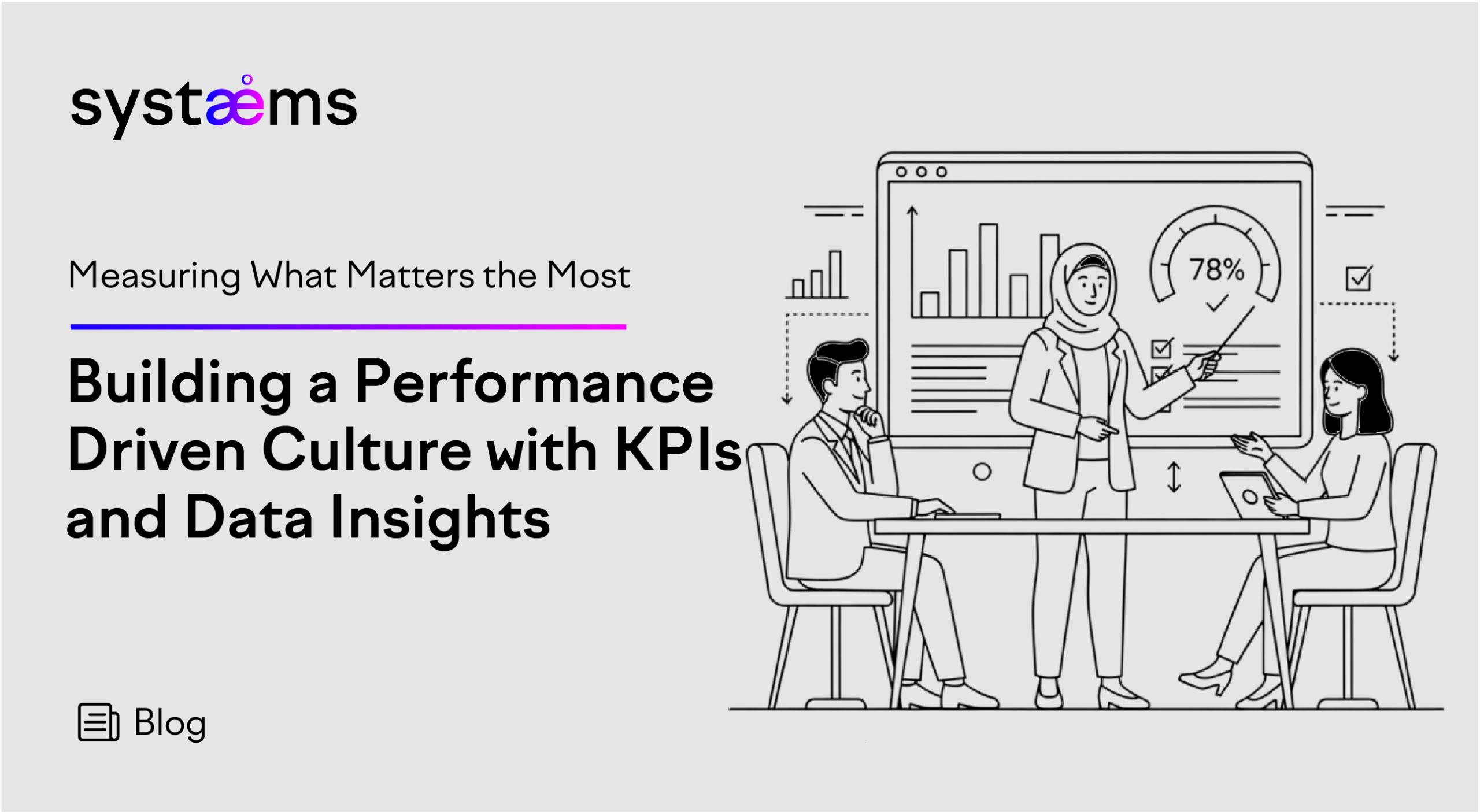
- Real-Time Monitoring: Leveraging dashboards for continuous tracking and quick intervention when performance deviates.
- Adaptive KPIs: Regularly reviewing and updating KPIs so they remain relevant to shifting priorities and market realities.
Systaems’ Performance Measurement Services help organizations design and implement KPI frameworks that enable agility, ensuring that performance measurement is not just a compliance exercise but a driver of resilience and growth.
Combining Data Services and KPIs for Maximum Impact
The most agile organizations do not treat data services and KPIs as separate silos. Instead, they integrate them to form a feedback loop:
- Data services feed accurate, timely information into performance systems.
- KPI frameworks interpret that information in the context of strategy and objectives.
- Leaders use those KPIs to review, decide, and pivot where necessary.
- Actions taken generate new data, restarting the cycle.
This cycle ensures that agility is not random or gimmicky but structured and sustainable.
Practical Roadmap for Implementation
Building agility is about embedding discipline. A structured roadmap includes specific elements as follows:
- Audit Current Data Systems to identify gaps and inefficiencies.
- Define KPIs that reflect both strategic priorities and operational needs.
- Invest in Visualization Tools for real-time monitoring and quick decision-making.
- Embed KPI Reviews into continuous performance cycles rather than annual reviews.
- Promote a Culture of Agility, where teams use insights to adjust strategies, not just report outcomes.
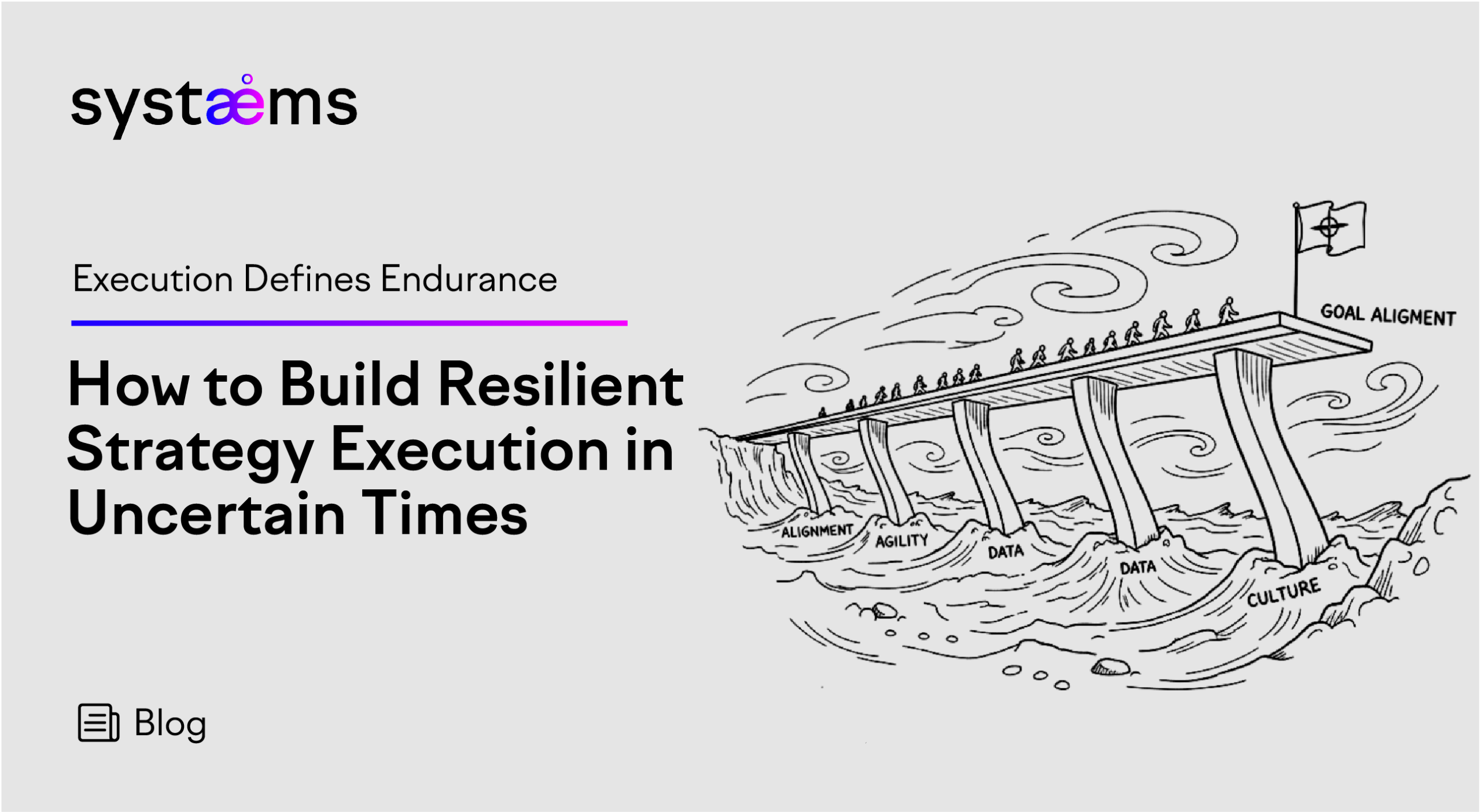
Systaems supports organizations through audit services, business planning frameworks, and operational performance consulting, ensuring that agility is not just conceptual but practical. These steps mirror the agility-enhancing practices we discuss in our blog post, “How to Build Resilient Strategy Execution in Uncertain Times.”
Real-World Example: Adidas and Digital KPI Transformation
A powerful example of agility through data and KPIs is Adidas. Faced with a rapidly shifting retail landscape, Adidas moved beyond traditional financial KPIs to adopt digital and customer-centric metrics, powered by machine-learning algorithms and integrated data platforms.
As noted in an MIT Sloan article, Adidas transitioned to prioritising metrics such as Net Promoter Score, digital engagement, and e-commerce growth rather than solely sales volume, thereby achieving accelerated responsiveness to market signals.
By combining data services with KPI reorientation, Adidas improved its ability to pivot product channels, track customer sentiment, and optimize inventory in a dynamic retail environment. This repositioning underscores how data-driven KPI strategies enable organizational agility and sustained competitive advantage.
Case in Point: Credit Bureau Cambodia
Recent consulting industry reports emphasize the centrality of data-driven performance to organizational agility. Firms increasingly leverage advanced analytics, cloud-based data platforms, and adaptive KPI models to support transformation initiatives [1][2].
By embedding these practices, organizations are better positioned to thrive in environments where uncertainty is the norm rather than the exception.
At Credit Bureau Cambodia, data services and KPI frameworks were instrumental in building organizational agility. Faced with a rapidly evolving market, the organization needed to strengthen its governance, align reporting, and ensure agile decision-making.
By implementing structured data services and KPI frameworks, the institution was able to:
- Integrate multiple reporting systems into a single, coherent framework.
- Improve decision-making through real-time dashboards.
- Build organizational agility to adapt quickly to regulatory and market shifts.
Discover additional success stories where Systaems has empowered clients with data-driven transformation by visiting our Success Stories page.
Benefits of Achieving Agile, Data-Driven Performance
Organizations that succeed in this integration realize a range of benefits:
- Greater responsiveness to shifts in market, regulation, or technology.
- Improved resource allocation, with decisions steered by timely insight.
- Enhanced visibility, enabling leaders to spot issues early and act rapidly.
- Stronger alignment, as teams operate toward common, measurable targets.
- Sustainable growth, through an embedded culture of adaptation and performance.
Challenges and Considerations
Despite the potential, organizations must address significant hurdles:
- Data Silos and Quality Issues: Fragmented systems and poor data undermine agility.
- Cultural Resistance: Teams may resist moving from annual KPIs to continuous monitoring.
- Too Many Metrics: Overloading dashboards leads to confusion rather than clarity.
- Governance Complexity: Without oversight, dashboards and KPIs can create false confidence.
Addressing these challenges requires leadership commitment, investment in data infrastructure, and a culture shift toward continuous performance management.
Industry Insights: Agility in 2025 and Beyond
Consulting outlooks for 2025 highlight a growing reliance on advanced analytics, cloud platforms, and adaptive KPI frameworks. Organizations that fail to embed agility risk being outpaced by competitors who can pivot faster and innovate more effectively.
As a member of The KPI Institute ecosystem, Systaems combines global expertise with local execution, helping clients embed agility across strategy, data, and performance management in over 60 countries.
Final thoughts
Agility is no longer optional for organizations seeking growth and resilience. By combining data services that ensure quality insights with KPIs that provide clear direction, companies can create a robust framework for continuous adaptation.
With proven expertise in data management and performance measurement consulting, Systaems helps organizations build the systems, tools, and culture required to remain agile and competitive.
 Learn how to future-proof your organization by speaking with a consultant today.