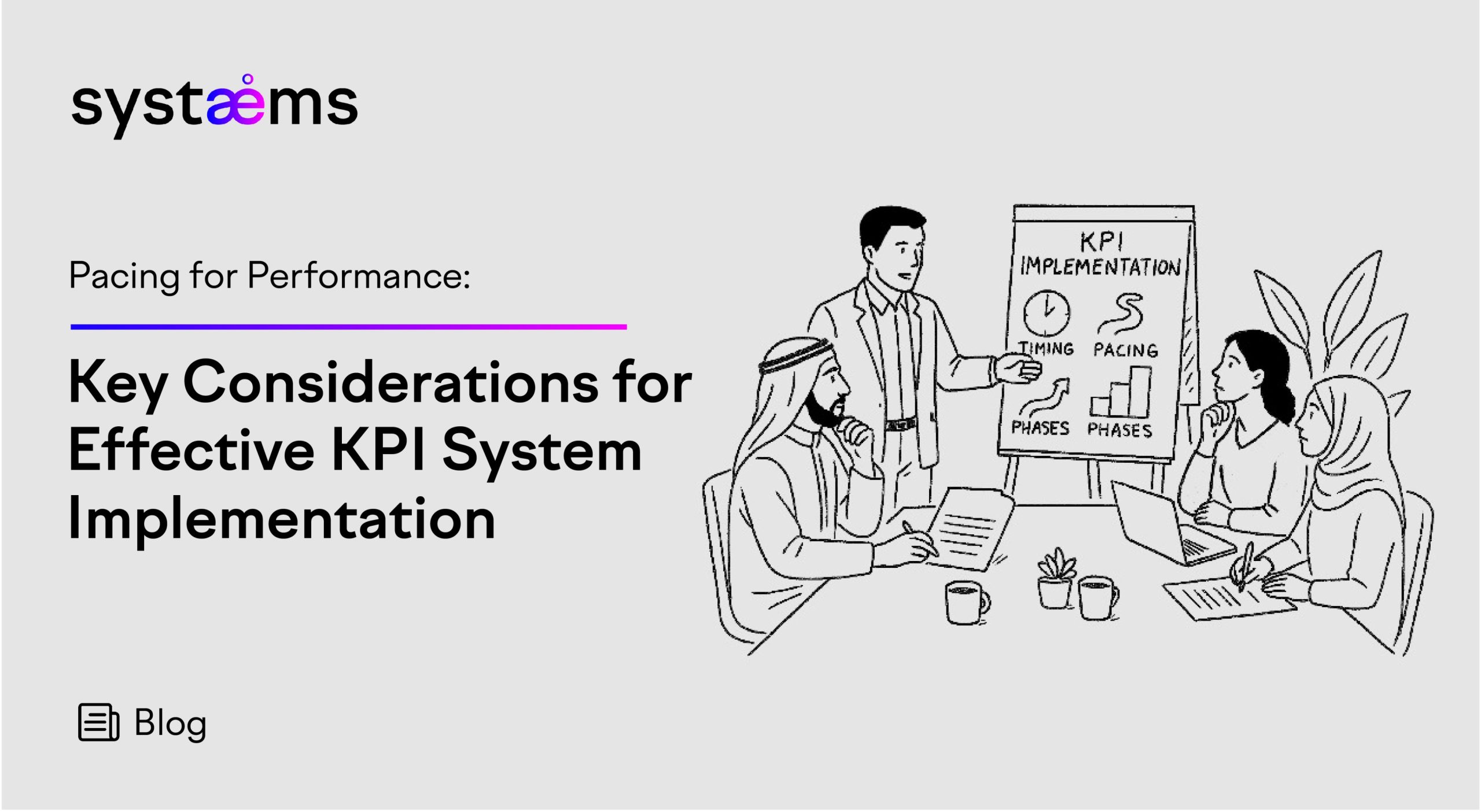
Implementing a Key Performance Indicator (KPI) system can transform organizational performance, but only if it’s introduced thoughtfully.
Success depends not just on the design of the KPIs themselves, but on the pace of implementation and the timing of deployment, ensuring employees can engage meaningfully and the system drives real results.
Implementing a Key Performance Indicators (KPIs) System is a vital step in strengthening an organization’s performance management and strategic alignment. However, to ensure the system brings meaningful value rather than becoming a bureaucratic burden, it must be introduced with care.
Two of the most critical factors in this process are the speed of implementation and the timing of deployment.
The speed of KPI implementation is a delicate balance between urgency and patience. While it may be tempting to fast-track the process to show quick wins or satisfy leadership expectations, introducing a KPI system too quickly can backfire.
People are naturally resistant to change, especially when it brings new procedures or measurements into their daily routines. If the implementation is rushed, employees may view the KPI system as an imposed burden rather than a valuable tool.
This resistance can erode trust, reduce participation, and ultimately lead to the failure of the performance management system (PMS).
Key Risks of Rushing KPI Implementation:
A phased, inclusive approach to KPI implementation allows employees time to understand its purpose, connect it to their daily tasks, and feel involved in the process. This gradual approach fosters ownership and alignment with organizational goals.
A successful KPI system should promote clarity and focus, not just generate additional forms and dashboards. Without this human connection, it risks becoming a layer of paperwork that adds complexity without driving results.
Advantages of a Phased KPI Implementation:
The timing of KPI system deployment is equally important. Organizations operate in cycles, and there are always periods of high intensity: year-end closings, peak sales seasons, or major product launches.
During these high-stress periods, teams are focused on immediate deliverables and managing volumes, not learning new processes or reflecting on long-term measures. Introducing a KPI system during these busy times can overwhelm staff and lead to poor adoption.
Challenges of Implementing During High-Stress Periods:
To maximize impact, the implementation should be scheduled during a quieter period when people have the bandwidth to engage thoughtfully with the system.
This allows better participation in workshops, training, and feedback sessions. It also ensures the system is not seen as an added stressor, but as a support structure that enhances performance and decision-making.
Best Timing for KPI Implementation:
Ultimately, a KPI system must be more than a technical exercise. It requires cultural adoption, leadership commitment, and strategic planning.
The right speed ensures people can adapt and connect with the system, while the right timing ensures they have the energy and attention to engage meaningfully. Organizations that get both factors right are more likely to implement a system that drives continuous improvement, sharpens strategic focus, and delivers measurable results.
At the end of the day, implementing a KPI system should not be rushed or poorly timed. Success lies in managing change with empathy and strategic foresight.
By respecting the pace of human adaptation and the rhythms of the business, organizations can build a KPI system that is not only effective but also embraced by those it is meant to empower.
Explore our case studies and resources to see how we’ve helped companies optimize their performance management.
Now that you understand the key considerations for implementing a successful KPI system, it’s time to take action. At Systaems, we specialize in tailored consulting solutions that help organizations like yours successfully introduce and manage KPIs to drive measurable results.
Contact us today to schedule a consultation and begin implementing KPIs that align with your organizational goals.
Evolve leadership KPIs to balance performance with people-focused outcomes in hybrid work models.
Use technology and analytics to optimize operations, reduce bottlenecks, and improve efficiency.
Explore how data, agility, and performance alignment shape the next era of consulting excellence.